تحدّي “الخطوة الأخيرة” للذكاء الاصطناعي… و HP ترى الحلّ في الطابعة
While discussions about Artificial Intelligence in enterprises have primarily focused on productivity gains and Copilots over the past two years, a critical aspect of the technology remains overlooked. AI has succeeded in improving the creation of information, but it has not yet achieved the same level of success in managing and handling that information. Today, the adoption of AI in organizations is accelerating at an unprecedented rate. In 2025, 78% of enterprises were already utilizing AI technologies, a figure expected to rise further in the coming years. Additionally, Microsoft 365 Copilot is being used by more than 90% of Fortune 500 companies, delivering estimated productivity gains of 10 to 15 additional hours per employee per month.
Despite these advancements, daily document handling in many organizations still relies heavily on manual steps. In many companies, scanning a document involves sending the file via email, downloading it, renaming it, uploading it again, and sharing it with others. These steps create unnecessary complexity in workflows, lead to delays, and increase the risk of errors. This represents what can be described as the “last mile” of the digital transformation journey that has not yet received adequate attention.
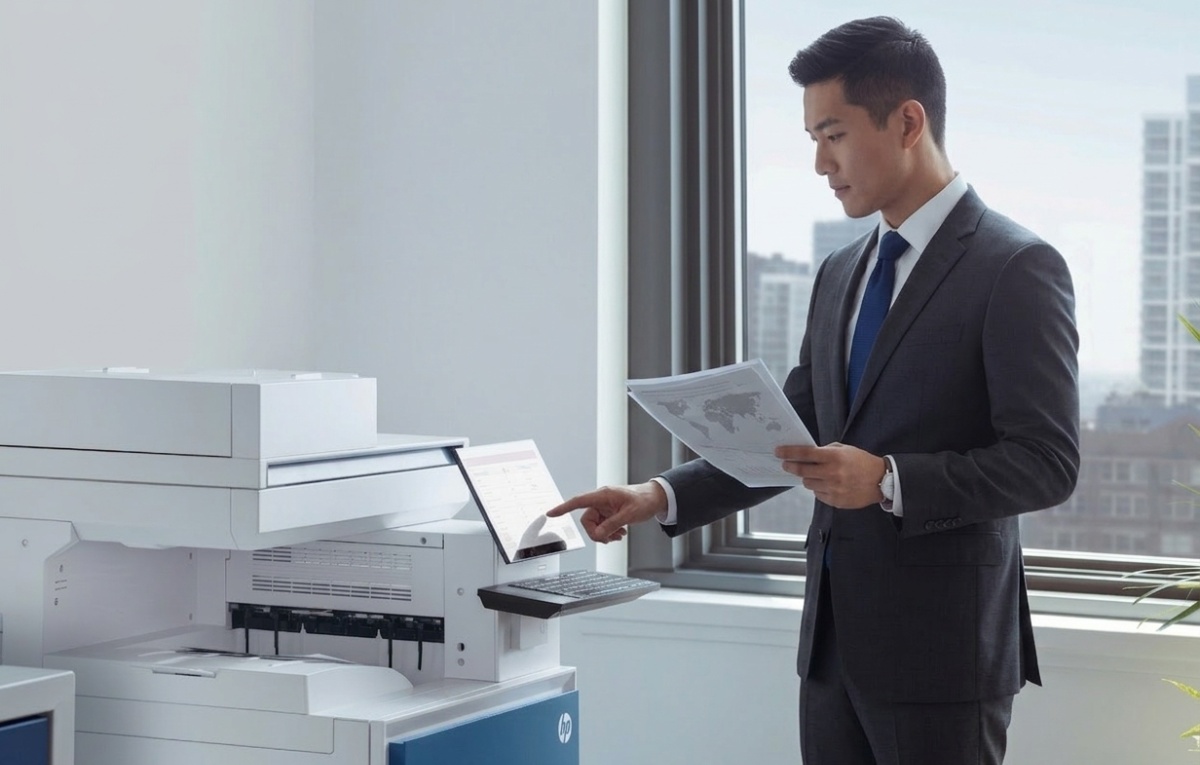
HP views the next phase of AI integration as addressing this gap. At CES 2026, HP unveiled “HP for Microsoft 365 Copilot,” which integrates Copilot capabilities directly into HP Smart Tank printers equipped with HP Workpath technology. Rather than treating the printer as a mere endpoint in the workflow, HP aims to transform it into a smart and efficient node within the document management system.
The concept is simple yet impactful. Once a document is scanned, its content can be automatically summarized, files can be intelligently named and directed directly to storage repositories like OneDrive and SharePoint, and documents can even be translated directly through the device before re-entering circulation within the organization.
These capabilities may seem like minor improvements, but at the enterprise level, they are significant. Productivity losses rarely stem from a single major problem; rather, they accumulate from small, repeated decisions: What is the appropriate file name? Where should it be saved? Who needs access to it? How can its content be summarized for stakeholders?
By integrating AI directly into shared infrastructure such as printers, HP targets these low-value, high-time-consuming decisions that consume significant time within organizations without being widely noticed.
For IT managers and leaders, this trend reflects a new phase in enterprise AI strategy. The first wave of AI focused on enhancing the cognitive capabilities of employees, while the next wave involves integrating AI directly into workflows and devices themselves. The HP integration with Microsoft Copilot embodies this shift from considering AI an independent tool to being an integral part of the enterprise’s digital infrastructure.
Naturally, integrating AI into document management raises important questions regarding security and governance. HP therefore incorporates Copilot capabilities within the advanced security framework of its work-oriented printers, leveraging Microsoft cloud standards for data management and protection. For organizations, productivity gains must align with compliance requirements, access control, and risk management.
On a broader scale, HP’s step reflects a significant shift in how AI is deployed within organizations. AI is no longer confined to applications but is extending to devices, endpoints, and shared systems within the work environment.
The message to technology leaders is clear: true transformation through AI does not depend solely on using more intelligent Copilot solutions; it requires identifying complexities in operational processes and redesigning them so that AI is embedded from the beginning.
Although a printer may seem like an unexpected element of innovation in the field of AI, in corporate work environments, the true transformation often begins with the small details of daily operations. Increasingly, companies like HP demonstrate that even the most common devices can become a core component of an enterprise’s AI strategy.

إرسال التعليق